Prototype recording real nights

Your breath.
Every night.
Measured.

A nasal ring that measures real airflow directly during sleep — at home, without clinic visits or complex equipment.

Smart Nasal Ring — Sleep Apnea Tracking, Start to Finish
80% of moderate-to-severe cases undiagnosed 1 in 8 adults aged 30–69 affected globally
Understanding Sleep Apnea

What is
sleep apnea?

Sleep apnea is a condition in which breathing repeatedly stops during sleep. These interruptions can happen dozens or even hundreds of times per night — often without the person being aware.

Type 01 · OSA

Obstructive

The airway is physically blocked — the tongue or soft palate collapses against the throat. The most common form, typically associated with snoring.

Type 02 · CSA

Central

The airway is open, but the brain fails to send the signal to breathe. A neurological issue — the body simply does not attempt to breathe for a period.

Type 03

Mixed

A combination of both obstructive and central events in the same person. Often one type transitions into the other within a single episode.

Types of sleep apnea — anatomical diagrams

The type of apnea can be determined once — through a sleep study. What matters most after diagnosis is tracking events every single night and understanding how they change based on your habits and routines.

The Solution

Direct airflow.
Every night.

A nasal ring worn during sleep that measures actual nasal airflow and syncs data to your phone.

Direct Airflow Measurement

Real nasal airflow sensors — not heart rate proxies. Measures airflow directly, unlike smartwatches or fitness rings.

All-Night Comfort

Lightweight ergonomic design. Charges in a compact case.

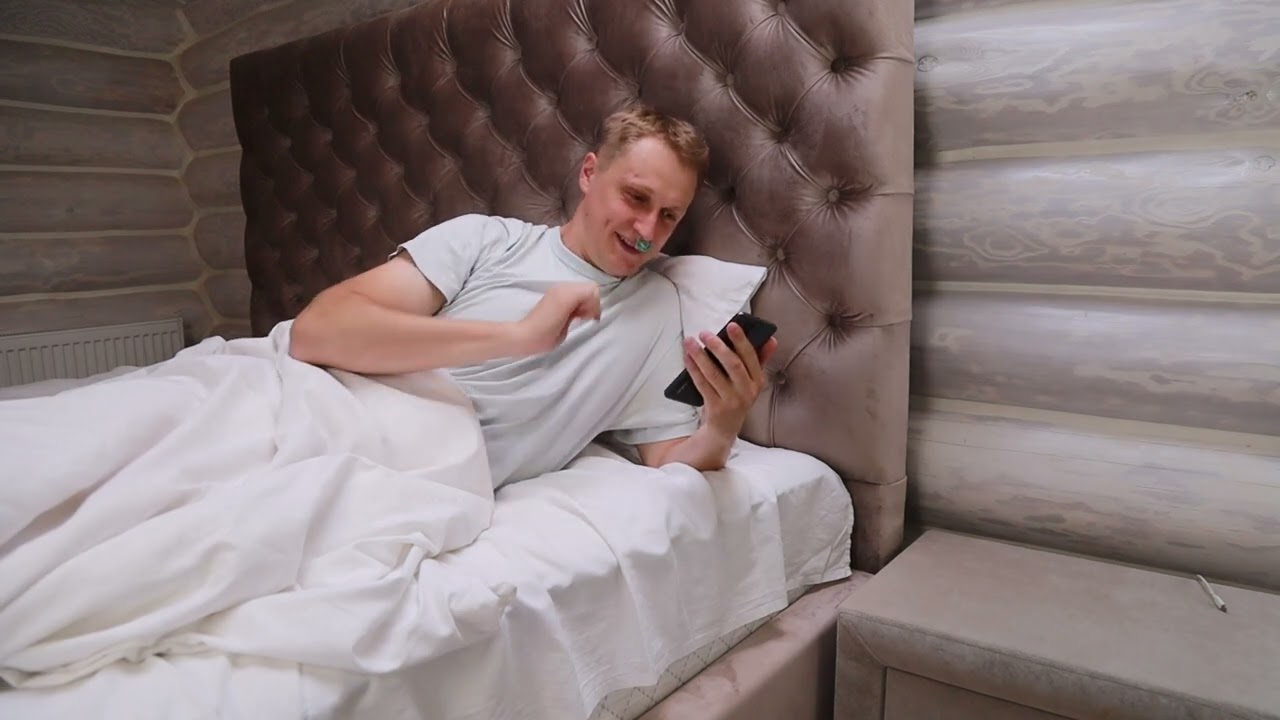
Person sleeping with Smart Nasal Ring
Smart Nasal Ring app — breathing monitor and session history
How It Works

Measure. Improve.
Share. Together.

Eight steps, one loop — wear the ring, see your data, try something new, track the change. Sleep apnea management reimagined as a positive feedback cycle.

How Smart Nasal Ring works — 8-step improvement cycle
Sleep Monitoring Solutions

Choose your kit.
Upgrade anytime.

The product lineup below reflects our planned device ecosystem. Hardware is currently in development.

Smart Nasal Ring product lineup

vs. existing solutions

Feature Sleep Lab Home PSG Wearables Smart Nasal Ring
Direct airflow measurementYesYesNoYes
Comfortable for sleepNoNoYesYes
Continuous nightly monitoringNoNoIndirectYes
At-home usageNoYesYesYes
Designed for long-term trackingNoNoGeneralYes

PSG — Polysomnography: clinical sleep study with multiple sensors

The Story

Built by someone
who lives with it

After COVID, I started waking up exhausted every single day. I was diagnosed with sleep apnea — and then left to figure the rest out on my own.

I went through sleep labs, polysomnography rigs, CPAP masks, clip-on oximeters, smartwatches. Nothing was designed for daily use. Nothing let me track what actually made a difference night to night.

So I built it myself. Not as a researcher. As a patient who needed it.

"Sleep apnea is highly individual. There is no single solution — each person must find what works for them. They need data to do that."

Aliaksandr Sabolka, Founder
Founder testing sleep monitoring equipment
Project Progress

Where we are
right now.

We are building in the open. This page is updated as the project moves forward.

New — women's design

From prototype to final product, smaller size for women

We are also working on a smaller version of the ring, sized for women.

Concept & Feasibility

In Progress

Problem validation, product concept and initial hardware exploration.

What we built

We built a re-flashable debug PCB and placed it inside a temporary housing to test the detection theory. This is not a final product — the housing and form factor are for testing only. The next step is a new PCB and a real in-nose ring enclosure.

The first prototype is quite big — but right now what matters is data and debugging, not size. Making it smaller comes next.

Debug PCB — airflow sensor and Bluetooth module

Debug PCB — actual size ~3 cm

Founder wearing the debug prototype

Founder wearing the very first debug prototype

Prototype enclosure in case

Prototype enclosure in carry case

Prototype v2 worn by the founder

Prototype v2 — worn by the founder

Founder holding prototype in case

Prototype v2 in carry case

Current focus

  • 1.Patent search started — protecting our core approach.
  • 2.Primary goal: build our own dataset for open public research and analysis.
  • 3.Exploring MEMS sensors. Current focus: reliable data transport to the cloud and connecting AI to the dataset. MEMS microphones look particularly promising.
  • 4.Next step: finalising sensor approach before moving into beta testing.
  • 5.Dataset scaling during beta testing.

Status update — video

Smart Nasal Ring — Sleep Apnea Monitor Prototype Demo

Latest prototype photo

Smart Nasal Ring prototype v3

Prototype v3

Prototype Development

First working prototype, airflow sensing validation, core firmware and mobile app MVP.

Updates coming soon — prototype photos, sensor test results, and hardware details.

Testing & Iteration

Internal testing, data collection, early user feedback, algorithm improvement.

Pilot & Validation

Pilot users program, real-world usage data, product optimization.

Launch Preparation

Final product design, manufacturing setup, go-to-market.

FAQ

Frequently asked
questions

At-home sleep apnea monitoring, nasal airflow sensing, and how the Smart Nasal Ring compares to a smartwatch or a clinical sleep study.

Can you monitor sleep apnea at home without a CPAP machine or a sleep lab?

Yes. A clinical sleep study (polysomnography) is used once to diagnose sleep apnea. After that, what matters is tracking how your breathing changes night to night. The Smart Nasal Ring is designed for exactly that — a wearable you put on at home that measures nasal airflow during sleep, with no CPAP, no clinic visit and no chest straps.

What is a smart nasal ring and how does it measure breathing?

It is a small ring worn on the nasal septum during sleep, similar in placement to a septum piercing. Airflow sensors in the ring measure the air you actually breathe in and out through your nose, then sync the recording to a phone app that charts your breathing cycles and counts interruptions.

How is the Smart Nasal Ring different from a smartwatch, Oura or fitness ring for sleep apnea?

Smartwatches and finger rings estimate breathing indirectly from heart rate and blood-oxygen sensors. The Smart Nasal Ring measures nasal airflow directly at the nose, which is the signal a sleep lab actually records to score apnea events.

Can it track apnea events every night instead of a one-time sleep study?

That is the goal. A sleep study is a single snapshot. The Smart Nasal Ring is built to be worn every night so you can see how habits, sleep position, weight, alcohol or medication change your apnea events over time.

Does the Smart Nasal Ring diagnose sleep apnea?

No. Diagnosis is done by a doctor using a clinical sleep study. The Smart Nasal Ring is a monitoring tool for tracking your breathing at home after diagnosis, not a diagnostic device.

What data does the Smart Nasal Ring record during sleep?

Nasal airflow across the whole night, the timing and length of breathing interruptions, and a per-night summary you can review in the app, compare against previous nights and share with your doctor.

Is the Smart Nasal Ring available to buy yet?

Not yet. The hardware is in active development and there is a working prototype recording real nights. The product lineup on this page reflects the planned device ecosystem. You can follow progress on this page or get in touch through the contact section.

Who is building the Smart Nasal Ring?

It is built by Aliaksandr Sabolka, who was diagnosed with sleep apnea after COVID and needed a way to track it day to day that existing sleep labs, CPAP machines and smartwatches did not provide.

Get in Touch

Interested
in the project?

We are at an early stage and open to conversations — whether you are an investor or a potential partner.

Funding

Investment to build, validate and bring our product to market.

Strategic Partners

Partners for pilot programs, testing and real-world validation.